A Glimpse of Havre de Grace
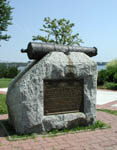 As early as the 1620’s this area was recorded on nautical charts and in short histories about the upper Chesapeake Bay and the large Susquehanna River which in the Indian language meant "river of islands". The large island located under the Thomas J. Hatem Bridge was part of a land grant given by King James I of England. It is named Garrett Island in honor of a former president of the Baltimore and Ohio Railroad. As early as the 1620’s this area was recorded on nautical charts and in short histories about the upper Chesapeake Bay and the large Susquehanna River which in the Indian language meant "river of islands". The large island located under the Thomas J. Hatem Bridge was part of a land grant given by King James I of England. It is named Garrett Island in honor of a former president of the Baltimore and Ohio Railroad.
During the Revolutionary War this small hamlet was visited several times by General Lafayette. He mentioned that the area reminded him of the French seaport, Le Havre. Hence, our town derived its lovely name "Harbor of Grace". The town was incorporated in 1785. When our young nation was searching for an appropriate site for the new capital city, Havre de Grace was very seriously considered and lost out to the Washington D.C. site by only one vote. As a result of that near brush with fate, you will find many of the streets such as Union, Congress, Washington, Lafayette, Adams, etc. bearing the names of noble revolutionary leaders and ideals.
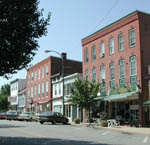 A scant few years later, during the War of 1812, the British again sailed up the Chesapeake Bay. After laying siege to Washington, D.C. and burning the White House, and having been held at bay by the patriots in Baltimore, they proceeded to Havre de Grace. Most of the citizens fled in fear, but Lt. John O’Neill single-handedly defended the town. He was wounded, captured, and imprisoned on the British ship Maidstone. The town was sacked and burned, with only two houses and the Episcopal Church spared. O’Neill’s fifteen year old daughter, Matilda, pleaded with the Admiral of the Fleet for her father’s life. Admiral Cockburn was so impressed by the girl’s bravery that he released O’Neill unharmed and rewarded Matilda by giving her his gold snuff box and sword. A scant few years later, during the War of 1812, the British again sailed up the Chesapeake Bay. After laying siege to Washington, D.C. and burning the White House, and having been held at bay by the patriots in Baltimore, they proceeded to Havre de Grace. Most of the citizens fled in fear, but Lt. John O’Neill single-handedly defended the town. He was wounded, captured, and imprisoned on the British ship Maidstone. The town was sacked and burned, with only two houses and the Episcopal Church spared. O’Neill’s fifteen year old daughter, Matilda, pleaded with the Admiral of the Fleet for her father’s life. Admiral Cockburn was so impressed by the girl’s bravery that he released O’Neill unharmed and rewarded Matilda by giving her his gold snuff box and sword.
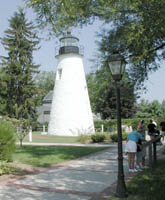 Havre de Grace has many sites of interest. The light house at concord Point was erected in 1827 with Lt. John O’Neill as the lightkeeper. This position was maintained by the O’Neill descendants until it was automated in recent years. One of the most famous horse race tracks, the Graw, was in operation from 1912 to 1950. In its heyday, trains brought passengers direct from the surrounding large metropolitan areas, and the jockeys voted it the best track in the country. Today, it is the home of the Maryland National Guard. Havre de Grace has many sites of interest. The light house at concord Point was erected in 1827 with Lt. John O’Neill as the lightkeeper. This position was maintained by the O’Neill descendants until it was automated in recent years. One of the most famous horse race tracks, the Graw, was in operation from 1912 to 1950. In its heyday, trains brought passengers direct from the surrounding large metropolitan areas, and the jockeys voted it the best track in the country. Today, it is the home of the Maryland National Guard.
In 1982, over 800 building were recognized with the establishment of the National Historic District. The decoy Museum was opened in 1986 with its collection of prized hand-carved decoys and other memorabilia of "gunning on the flats. Havre de Grace became known as the "Decoy Capital of the World" because so many of the master decoy carver’s live, lived, studied, or were affiliated with this town throughout the years. The restored Susquehanna Lockhouse is now a museum featuring numerous exhibits of canal days and local history.
Four boat marinas and five city waterfront parks dot the shoreline. At Tydings Park at the foot of Union Avenue, the view is spectacular. Please stroll the streets, visit our many unique shops, meet the friendly folks here, and enjoy your visit in the "City by the Bay".
|